Homepage

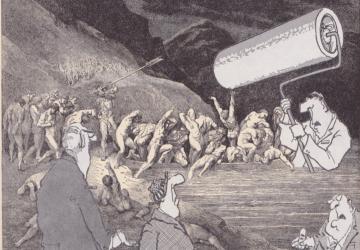
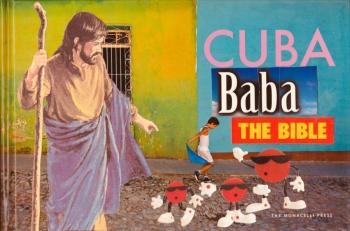
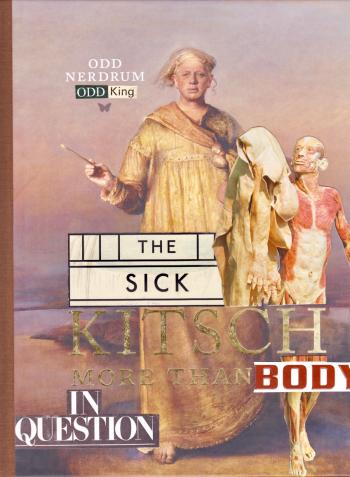
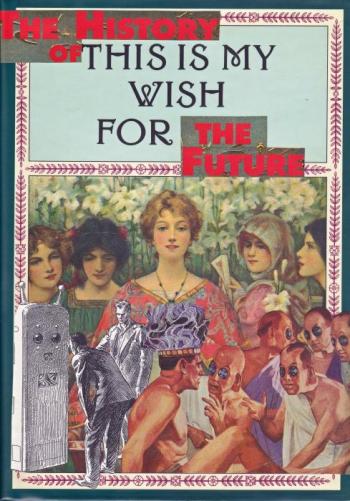
I have been hyper-illuminating books for a quarter of a century, and I am trying a new way of exhibiting these “bibliolages” (books + collages) in a series of short films, more than one hundred, on YouTube.com. Directed by Rebecca Lennon, these films open up one book at a time, with my narration. Here are the first two dozen:
-
Understanding the Far Eastern Western Horizon of Healing (2015)
-
The Diagnosis of Wild, Weird, and Wonderful Nervous Diseases (2012)
-
Uncle Wiggily and The Confessions of an English Opium Eater (2025) and Shakti Uncle Wiggily (2019)
-
The Dark: G, PG-13, R, NC-17, and XXX (2015, 2016, 2018)
-
Easter Dinosaurs (2011) and Vlaminck Dinosaurs (2014)
- The American Elephants (2020)
-
An Artist Poops (2018)
Episode 1 and 2 are introductory, but the other episodes are in no particular order.
Episode 1 looks at a key originating moment of this form, the creation of my Pictionary of the New Practical Standard Dictionary Lexikon of the New World Dictionary, Based on the Labours of the Most Eminent Lexicographers from 2001-2002. I transformed a small collection of illustrated dictionaries into a tidy volume, packed with that anonymous art.
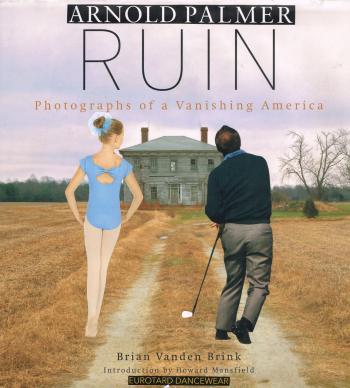
Episode 2 looks at the Revised Revised New Testament (2003), which takes the illumination of Biblical text to a new level, hence hyper-illumination. How does the ancient Bible, from the years that invented A.D., get pictured or seen in the Golden era of book illustration (19th-20th centuries)? Oddly. Evenly. Wonderfully. In any case, doubly revised.
Episode 3 looks at an early work called I Wonder Why to Buy an Elephant. The merest trifle of a throwaway book from 1963 gets reconsidered by jocular American capitalism and the caustic reality check of an anarchist dreamer, Edward Abbey.
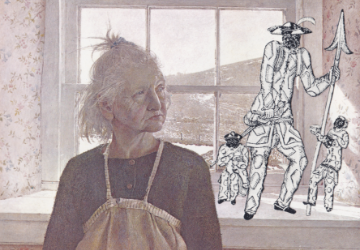
Episode 4 looks at my occupation of a book of paintings of the iconic American artist, Andrew Wyeth. I bring in the characters of the Italian form of improvised comedy, which became the basis of modern clowning and comedy, with figures such as Arlecchino (Harlequin), Pulcinella (Punch), and Pantalone. These sharp black and white drawings from the 16th to the 19th century complement Wyeth’s soft earth tones, and Wyeth moderates their raucous pleasure.
Episode 5 looks at the rightly famous volume of photographs by Walker Evans, Many Are Called, first published in 1938. The copy I use is an edition from 1966, with an introduction by a famous man I praise, James Agee. Candid photographs of people on the New York subway here meet images I lanced from a volume of celebrity photos that appeared in People magazine. I underscore the abrupt crossover from candid to celeb with quotations from Andy Warhol, who allegedly said: “In the future, everyone will be world-famous for 15 minutes."
Episode 6 looks at a book that celebrates outer space travel with particular attention to the exploration of the Moon. The photographic art transcends gravity in these pictures, and I felt that they demanded a response from the art that explores the limits and possibilities of gravity on the human body: dance. I used imagery from a dozen different books on the range of dance forms, and thus added to the realm of what we call celestial bodies.
Episode 7 looks at a maximalist portfolio of maximalist photographs by Max Vadukul, pictures of VIPs for high-end magazines. This gigantic book intrigued me from the moment I spotted it at a used book sale, but it took a couple of years for me to figure out how to address it. In the process, I discovered that I needed orchids, masks, fascist sculptures created for Mussolini’s Italy, and diagrams of head and neck surgery to respond in a way that seemed to fit–or to stretch. This project required bibliomaxxing.
Episode 8 looks at a book that brings together various photographers’s images of Mono Lake, the place Mark Twain called "The Dead Sea of California" and "the loneliest spot on earth." John Muir described it as "frost and fire working together in the making of beauty." I’ve been there and seen that no adequate reference point to its strange, huge formations can be found. It’s unearthly. Then, I found the Japanese art of netsukes, miniature carvings that somehow have always known this place in its every rupture and belch. So, I put them there and then, as it turned out, I put them there again. A curious story of what happens when art meets the nature of time, twice.
Episode 9 looks at a book I would not have bought except for the purpose of making such a contrary statement. Kennedy Center is an institution I entered many times by a side door, with a key, in the 1980s–something to do with the performing arts, American National Theater, if only. President Trump wants to batter open the front door with the ram of his name, only to demolish. So I had to buy a copy (used) of his book Our Journey Together to do the work. What art would have flourished at the Kennedy Center under his leadership? Kitsch is the sellable art of fascism, the state of totalitarian art. The only “fit” quantity of that would be “too much Trump,” which here I endeavored to supply, an excess of Brand X = Y?
Episode 10 looks at Apocalypse, a fourteenth-century illuminated manuscript, which is at the Cloisters, the medieval collection of the Metropolitan Museum of Art. The museum issued a facsimile of that book, together with a translation and scholarly discussion. Something told me that this biblical representation of end times would speak to the photographic vision of Diane Arbus, specifically the famous Aperture monograph that came out in 1972, a year following her death by suicide. She had an eye for the way human beings sometimes misalign with the conventional assumptions about life. So does God.
Episode 11 looks at two versions of a clashing combination that seemed to make sense at an early point in the development of this art–and still applies. Henri Rousseau (1844-1910) was a defining figure of what came to be called outsider art. His untutored vision was fresh and surreal, or at least irrational. It occurred to me to counter it with imagery from the history of medicine, which was emerging from its “naive” phase during the same period (and still?). I did this once and then again, as I was emerging from my naive phase.
Episode 12 looks at a book that is an anthology–an organized set–of photographs by different photographers of places in The Nature Conservancy, an organization that is dedicated to protecting “the places that shape us, inspire us and connect us across all generations.” My bibliolage brings a kind of litter or adornment to the photographs, which I hope someone might see as a way of honoring the art and the nature. Each set of photographs gets a different hyper-illumination. These are the photographers: William Christenberry, Lynn Davis, Terry Evans, Lee Friedlander, Karen Halverson, Annie Leibovitz, Sally Mann, Mary Ellen Mark, Richard Misrach, Hope Sandrow, Fazal Sheikh, and William Wegman.
Episode 13 looks at a book of panoramic photographs of the Western US by Macduff Everton. I did not grow up in the West, but I’ve lived in California for more than half of my life, and I understand it to be a state where West meets East. In the vast empty spaces in the photographs, I saw a contrast of world visions playing out, specifically different perceptions of the human body, its pathology, and its healing. So I brought in books of physiology and medicine from West and East. My “treatment” of this book was holistic, in that I did a kind of therapy on pictures and text and margins, I think for the greater good.
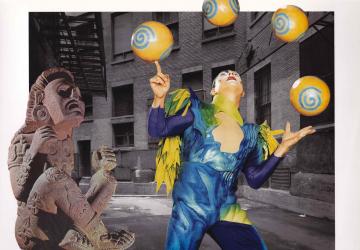
Episode 14 looks at a book of photographs of circus performers from the era around 1900. Circuses, especially in their sideshows, have exposed human beings in extraordinary forms and acts. Something (and I can’t exactly identify what) gave me the impulse to bring in a. Medical book images of nervous diseases, and b. Children’s book illustrations, especially Shel Silverstein’s drawings and pictures from the Rocky and Bullwinkle cartoons. On my blog, I wrote: “Coming from a medical family, I grew up with medical books just within reach. Childhood was laced with the grotesquerie of disease. What is the proper attitude toward the disturbances of the human condition? Childhood, as managed by educators and guardians of moral health, regulates the strangeness. But then, once in a while, the circus pulls into town, with freight cars of disturbance.” Some of the images did not meet YouTube standards of propriety, and so this film is shorter than the others. You can see more on my website.
Episode 15 looks at a massive book created by the self-described “dance artist” Marjorie Goodson. I would say she is a performance artist who employs the plastic and performing arts in extravagant ways to transform herself into an embodiment of art, no matter the cost. Working with photographer Andreea Radutoiu, as well as a whole theatrical and choreographic team (plus buckets of paint, wild costumes, and outrageous wigs), she takes personal expressivity to a new level. The book that she (and her team) created to showcase all this work is also over the top. It is thick, tall, wide, printed on heavy paper, strongly bound. This project called for imagery of a magnitude and boldness beyond what most collage artists deal with. Even after I had stockpiled a great quantity of promising material, I worked feverishly for three months putting everything in place, and I was constantly going out in search of more, all to match her extraordinary expressive effort, no matter the cost. One morning, I woke up with the perfect punning title for this work: Art for Art’s Ache.
Episode 16 looks at a pairing of two artists well-known for their highly realistic and intimate depictions of the human figure in a contemplative, reflective attitude. Johannes Vermeer was a defining artist of the Dutch Golden Age, one who apparently used available technology of the time to capture precisely the subtle effects of light and shadow on a person in a room. His best-known paintings focus on beautiful women, seemingly lost in thought. Carole Feuerman is an American artist, still working, who uses available technology to create hyper-realistic sculptures in resin or bronze, typically depicting women. Her best-known pieces depict a female swimmer wearing a bathing cap, at rest as if at the end of a lap. This bibliolage pairs one book of Vermeer’s paintings with one book of Feuerman’s swimmers. And I like how they agree.
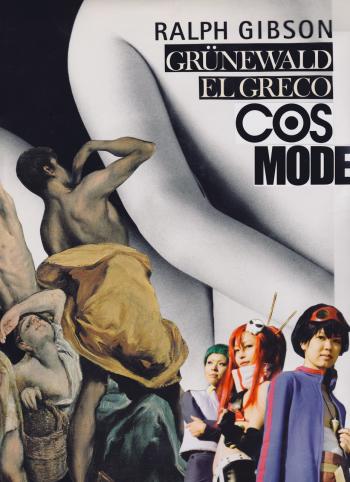
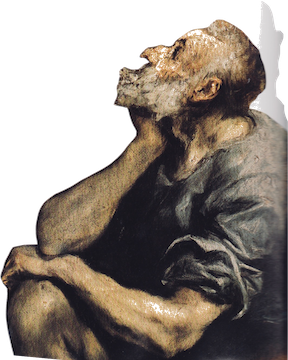
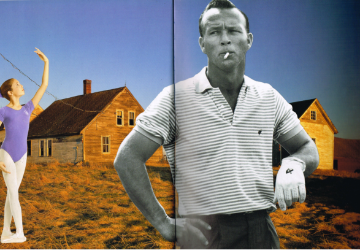
Episode 17 looks at a photographic monographic by the appropriately respected photographer Ralph Gibson, who was lauded in the 1990s and early 2000s, when photographers were held in the highest regard (before smartphones flooded the picture world). In a later moment, I saw in this book an invitation to measure them against old mastery (El Greco, Grünewald) and young flair (Cosplay).
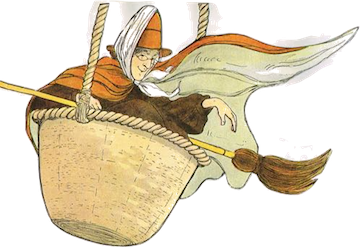
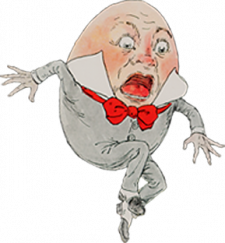
Episode 18 looks at two offshoots from the Uncle Wiggily books. A good adjective for hyper-illumination is “wiggily,” a word I have carried over from my childhood reading of the Uncle Wiggily stories. I can’t entirely explain it, but childhood fascination with adult deviation (the wiggle) gave those books their oomph. I’m not sure school boards would approve of the capers and guffaws of Uncle Wiggily, Nurse Jane Fuzzy Wuzzy, and the Pipsisewah, even leaving aside the Bazumpus, the Crozokus, and the Scuttlemagoon. The illustrations brought these books to life (albeit crazy), and in these two books I found ways of highlighting their permissiveness.
Episode 19 looks at a set of five books I created, using five copies of The Dark by Lemony Snicket, illustrated by Jon Klassen. This book considers a young boy’s fear of the dark, and it uses an unusual amount of black for a children’s book. As soon as I saw it, I thought I could fill in that blackness with what comes to mind when I think of what a boy might fear of the unknown, namely the adult world. I thought I might use the Motion Picture Association rating system as a guide to each of the five bibliolages. Imagery used in the more adult books, especially XXX, will have to be censored to meet YouTube guidelines, but all five books can be seen on my website.
Episode 20 looks at dinosaurs through two new lenses. A book that was given to me by my sweet grandmother sweetly celebrated Easter-time in pastel colors and flowers, plus some Jesus. It interested me little at the time, but about 50 years later, I used it to reconnect with my schoolboy fascination with dinosaurs. I still love dinosaurs, especially with the emergent idea that they might have been colorful, not all gray. A precious book about the Fauvist painter Maurice de Vlaminck gave me a perfect place to situate those roaring dinosaurs. Fauvism got its name from the French word for “wild beast,” and what could be wilder than dinosaurs?
Episode 21 looks at a book written and illustrated by that most facile of painters of Americana: Thomas Kinkade. His book is quintessential gift shop and celebratory of patriotism, piety, and puritanism. In this book, he harnesses his well-known pictorial style with syrupy ideas about Christianity and national pride, and the package is comfy cliché. I thought to bring in the incredible, explosive diversity of Picasso, an art that reaches to every corner of human experience, including the most disturbing, the least comfy. He re-invents one after another tradition of European art and breaks censorship barriers, always going beyond the simplistic ideal to the visceral truth.
Episode 22 looks at an example of the kind of book that is more a novelty than an instrument for reading. Victorian Flowers & Fairies (1997) simulates a Victorian photo album, offering slots for snapshots to be inserted by someone who wants to be seen in that decorative light. I instead inserted details from a German book about German expressionism. After all, there was a lot of interchange between the world of Queen Victoria and the world of 19th-century Germany, but Expressionism is the art that arose from the subsequent Great War. The agony, the horror, the insanity of that conflict introduced a sense of color into art that clashes appropriately with “Flowers & Fairies.”
Episode 23 looks at what doesn’t exactly belong there. Well, that is true of all hyper-illumination. Elephants, amazing elephants, do not dwell in the United States. They are not part of the landscape, and the landscape has been observed and watched closely by all sorts of American artists, including the Impressionists. But look more closely and they not only dwell, they fit into the scene and among the human subjects.
Episode 24 looks at a cute little book that celebrates the artist, the good-natured and bearded fellow who sweetly puts pretty things in the world. This fell into my hands. So it happens that, around that time, I came upon a children’s book that got a lot of attention for the frankness of what it addresses in the title: Everyone Poops. The text was all about a basic truth, and it used big block letters to show how basic. The pictures used, yes, art to portray that truth of how, indeed, everyone puts poopy things in the world.

My new book on collecting just got "launched" at the University of Chicago Press. We wrestled with the title (mine was originally Having/Had: Thinking Through Collecting at an Endpoint), but the title we arrived at is better, in some respects: Enough Is Enough: Thinking Through Collections at an Endpoint. The release date is August 2027, which seems so long from now, but we will be fine tuning it, designing, producing, and figuring out how to market it.
This book grew out of the Discovery Seminar I have taught over 30 times since 2008: Collectors and Collecting. So, 600 or so students have helped me think it through. Here is a look at the table of contents. ("We = collectors.)
Where Do We Begin?
Who Are We?
Why Do We Do This?
Where Do We Come From?
Who Do We Know?
What Is Having?
How Much Is Too Much?
How Much Is It Worth?
What Is Possible?
Where Is It Headed?
What Is the Endpoint?
Suggested Reading
Acknowledgments

Envelope Developments is the outcome of a series of collages built on my envelope lining collection (ca. 1200 items). I have created a large portfolio, 12" x 18", including 26 images, and a small version, 8.5" x 11" with the same images. They are both in limited editions of 25 copies.
I will be introducing this new work at the COLLAGE::BOOK event in Montreal, October 2-5, which includes a series of panel discussions sponsored by Kolaj magazine. I had some of my work appear in a special edition of Kolaj called Deconstructed Collage, back in 2020. I also was going to present at the 2019 International Festival of Collage in New Orleans when the city was unfortunately side-swiped by a hurricane. (It was interesting to watch the flood waters rising outside the house-sit where we were staying when it became clear that the flooding was not going to be disastrous.) The festival and presentations, unfortunately, were canceled.
My presentation in Montreal is going to talk about how collage relates to books, and it will take place at some time on October 3.
See the image at the side for some account of what Envelope Developments is getting at. Click the title, above, for a gallery of images used in this book.

A sample of what's in the portfolio.


I am thrilled to announce the publication of my book on how, when, why Eugene O'Neill's Long Day's Journey Into Night came to be written in California at a place called Tao House. Anthem Press is the publisher, and the book was released September 3, 2024.
Here is a review by Rachel Shteir that appeared in the Wall Street Journal: https://www.wsj.com/public/resources/documents/rWqo5EmqdWd3eSEHjY5X-WSJNewsPaper-1-11-2025.pdf
And here is a link to a review in The Eugene O'Neill Review by Katie Johnson: https://muse.jhu.edu/article/954296
Here is some information about the book:
- This book takes a fresh journey to Eugene O’Neill’s Long Day’s Journey Into Night, locating in the house, the marriage, and the historical circumstances in which it was written new keys to understanding this masterpiece of drama
I spoke about this book and had a conversation about it with Professor Jessica Nakamura on Thursday, November 21 at 4:00 p.m. at UCSB's Interdisciplinary Humanities Center, in the McCune Conference Room, 6th floor of the Humanities and Social Sciences Building. Here is a link to a video of that event:
https://www.youtube.com/watch?v=Cx_hZfZp_eE
I gave a talk about this book at the California Book Club on August 10, 2026, and here is a link to the talk:
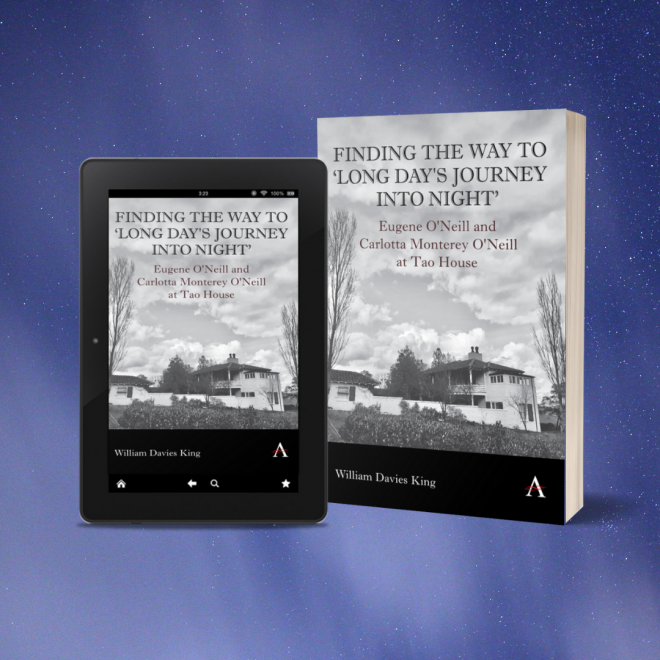
A profound new way to approach Eugene O’Neill’s Long Day’s Journey Into Night comes from reading this intensely autobiographical masterpiece in terms of the Taoism-inspired California house where it was written on the verge of World War II and the fractious marriage to Carlotta Monterey O’Neill to whom the play is dedicated.
- Eugene O’Neill wrote his most enduring and important plays after he won international acclaim as the first and only American playwright to receive the Nobel Prize in Literature in 1936. In the midst of the Great Depression, with his health failing and spirits sunk, he and his third wife, former actress Carlotta Monterey, moved to California to escape the materialism and commercialism of a declining “West,” and they built a new home called Tao House. A reasonably good translation of tao is “the way,” and in this house, which was largely the creation of Carlotta, he found the way to his most famous play, Long Day’s Journey Into Night.
- As an unusually explicit autobiographical drama, this play returns to 1912, the outset of O’Neill’s writing career, when he confronted tragedy in his family story and found a way to dramatize his mother, father, brother, and himself in a way that has resonated with audiences since its publication and production in 1956. But this book argues that the play originates as much in the moment of its creation, 1939–1941—in the family relationships, the historical circumstances, and the fact that this work would represent a moment of closure of his great career.
- Key to this heroic story of creation is the intervention of his wife, Carlotta, whose diaries enable a day-to-day observation of how the play was written. She was the driving force behind the design of Tao House, and she managed the rhythms and patterns of life within its architecture. It was her masterpiece, just as Long Day’s Journey was his. This book develops a close reading of their house and marriage and also uses many of O’Neill’s previous plays to illuminate the breakthrough of Long Day’s Journey.
- This book is the most granular and at the same time the most far-reaching inquiry into how this quintessential play was written (and almost not written) and how it came into the world.
Publication Date: 23 September 2024
Price: £80.00/$110.00
Publisher: Anthem Press
Distribution: Ingram Publisher Services
ISBN: 9781839992490
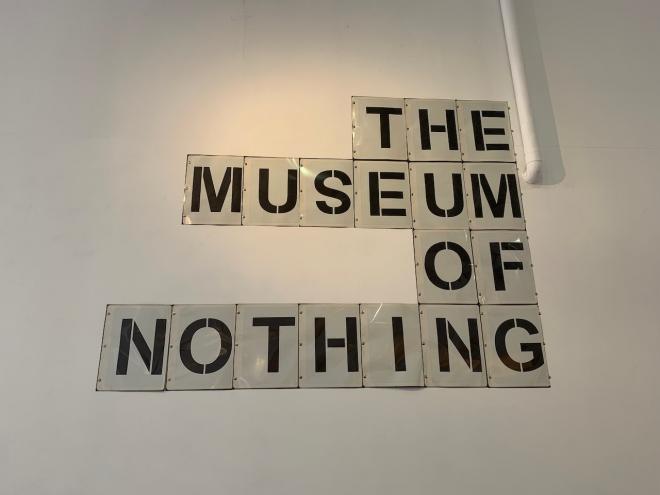
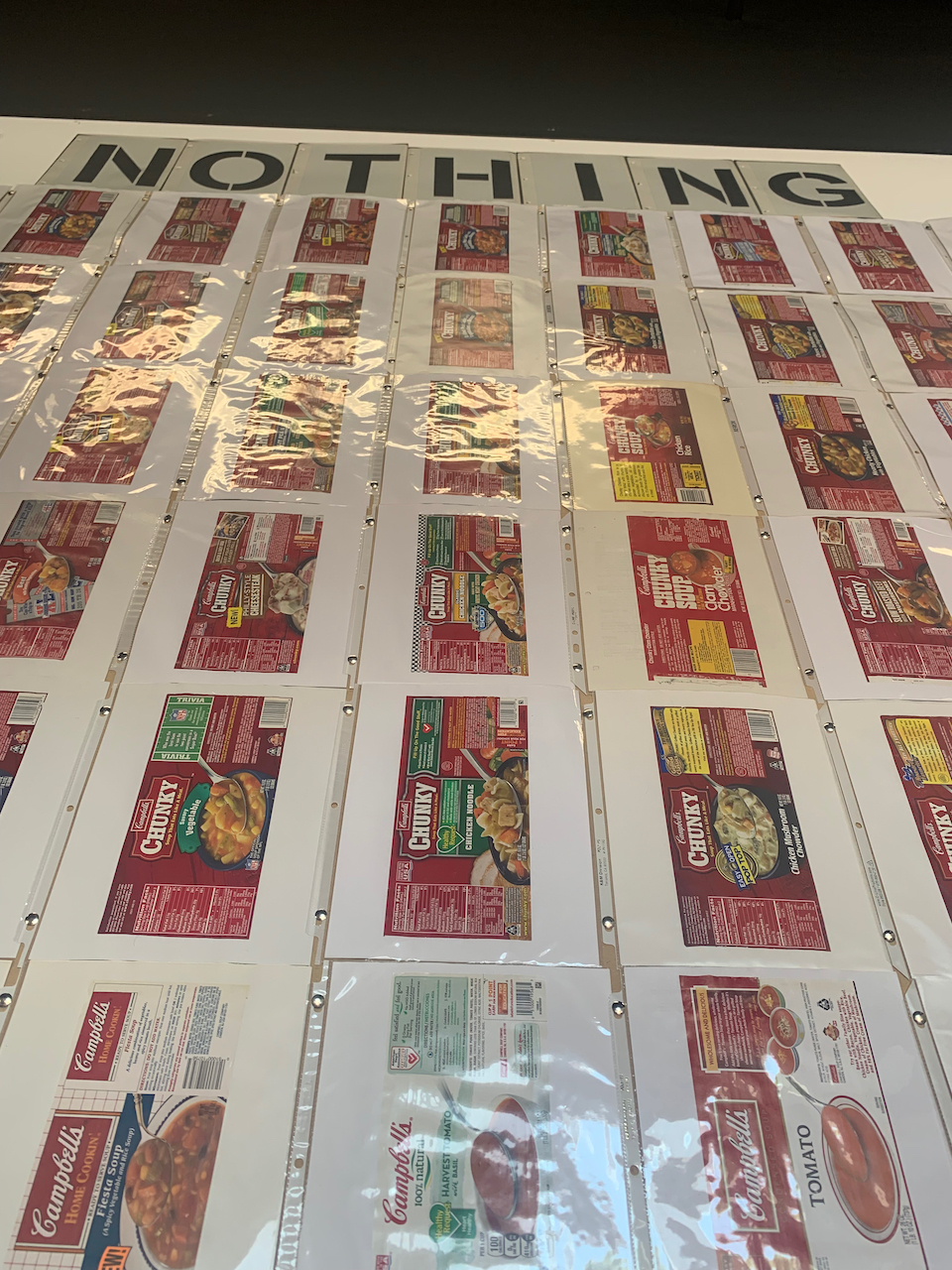
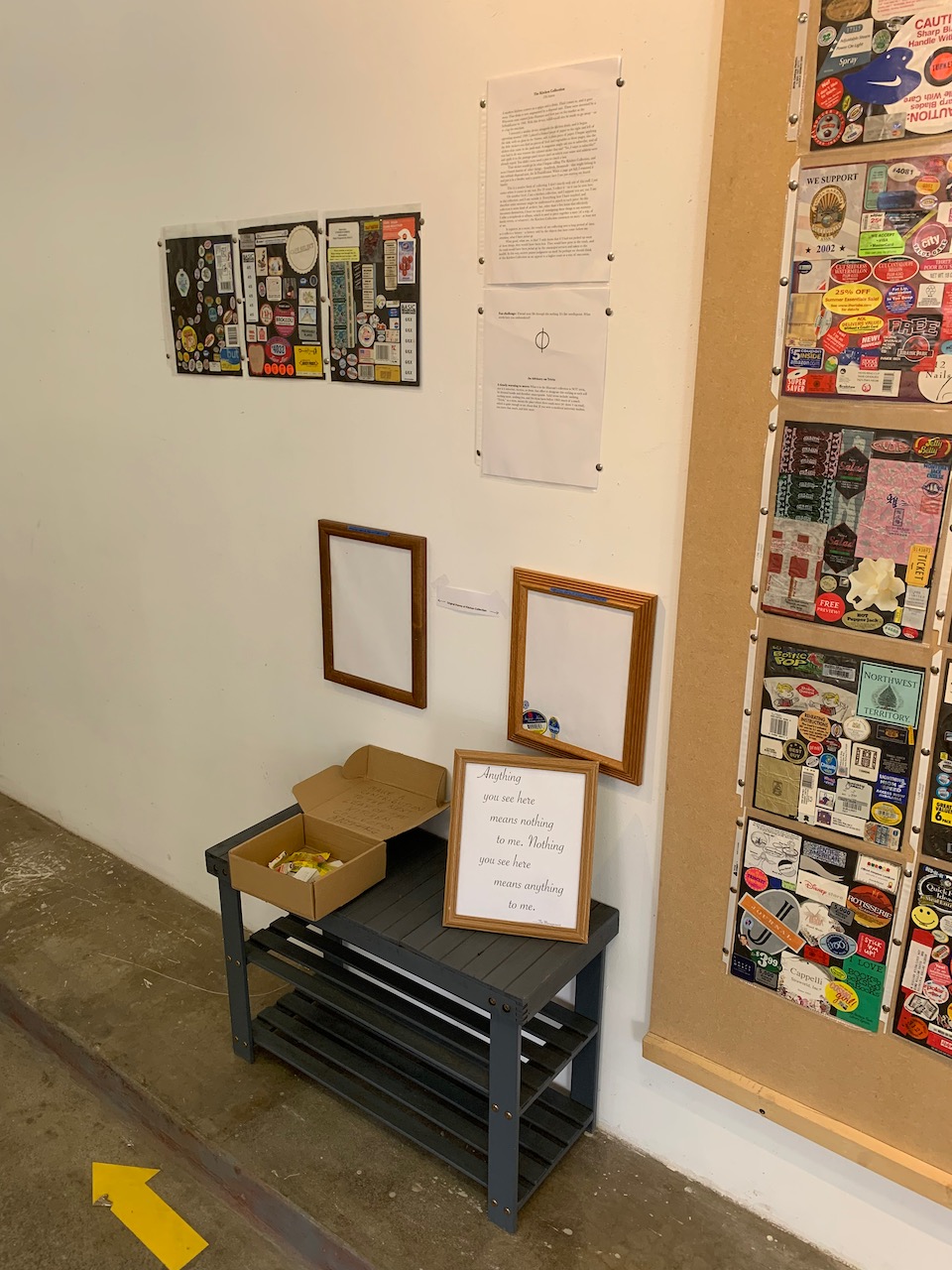
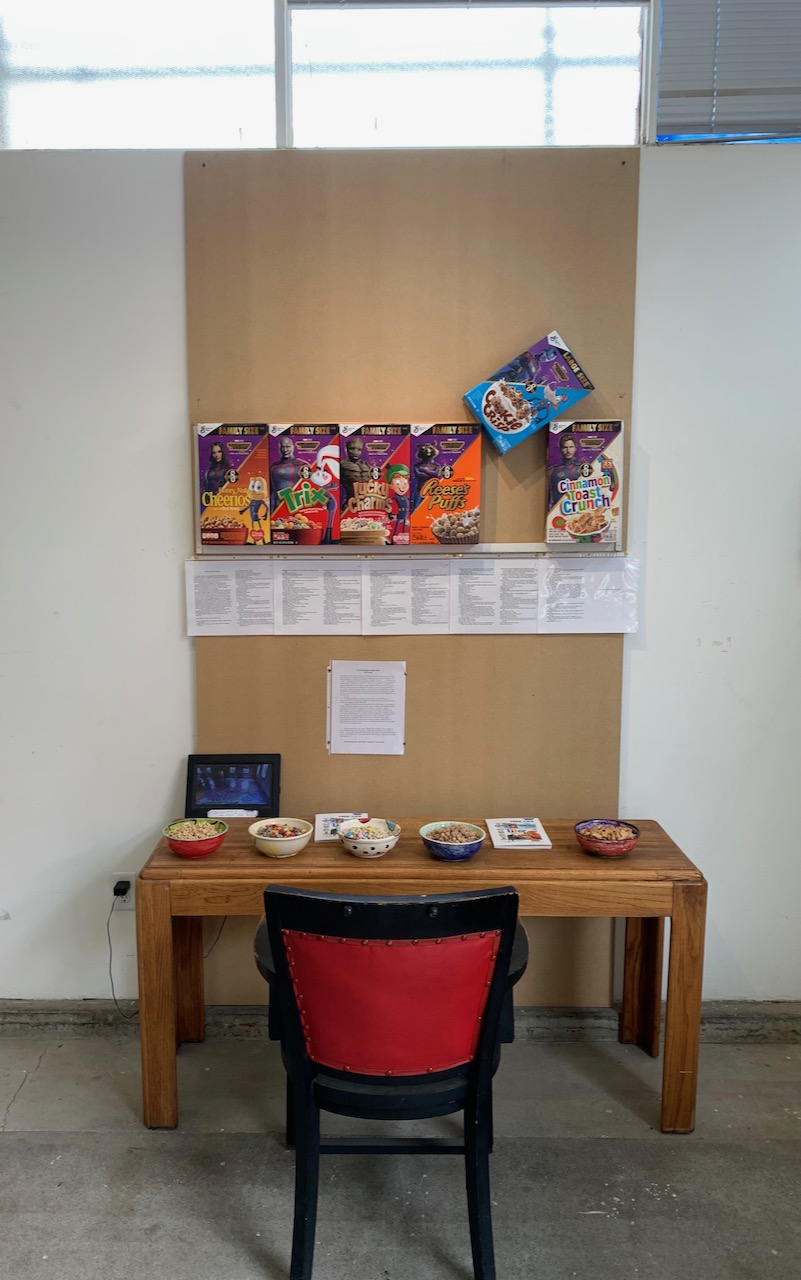
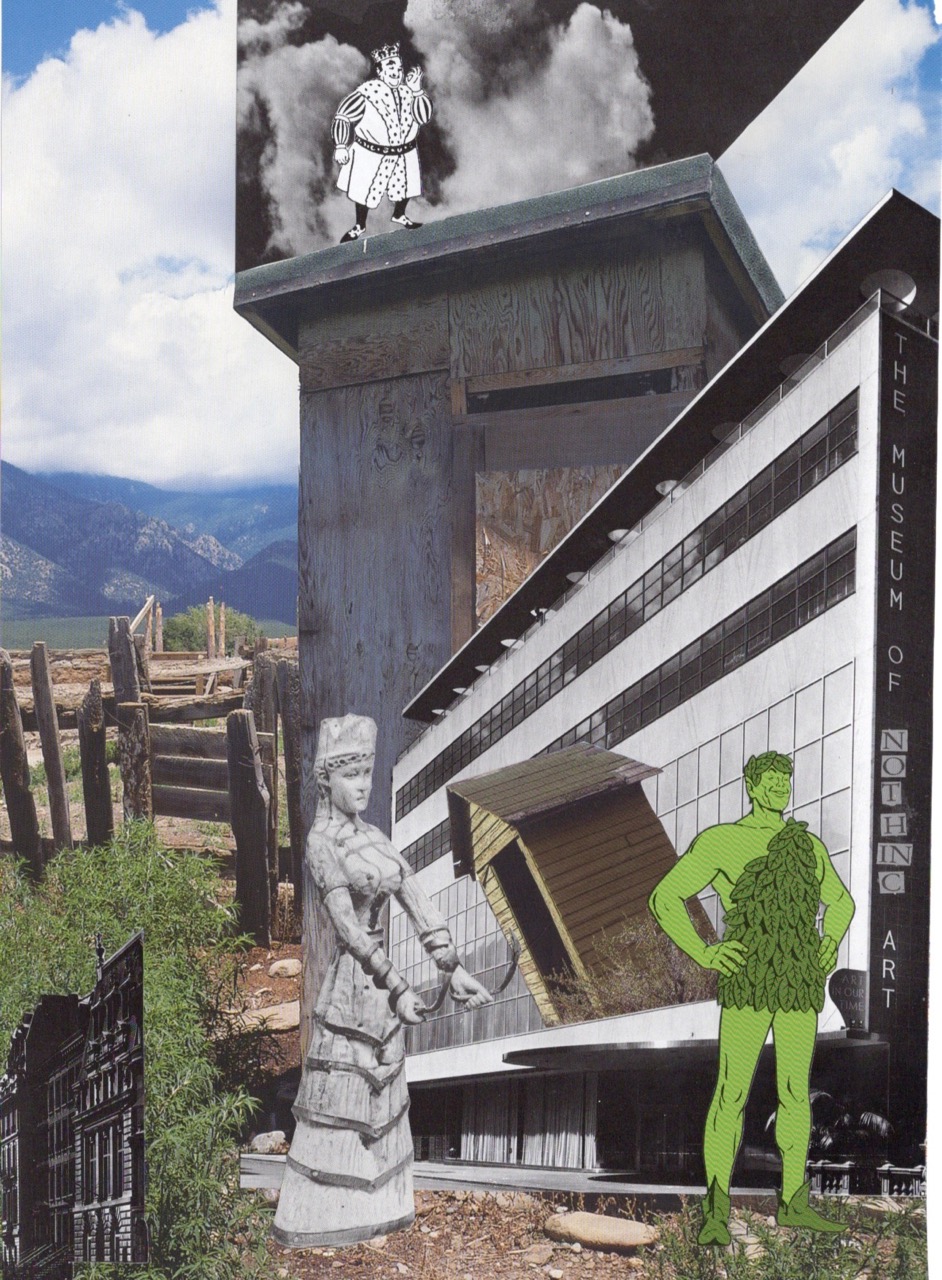
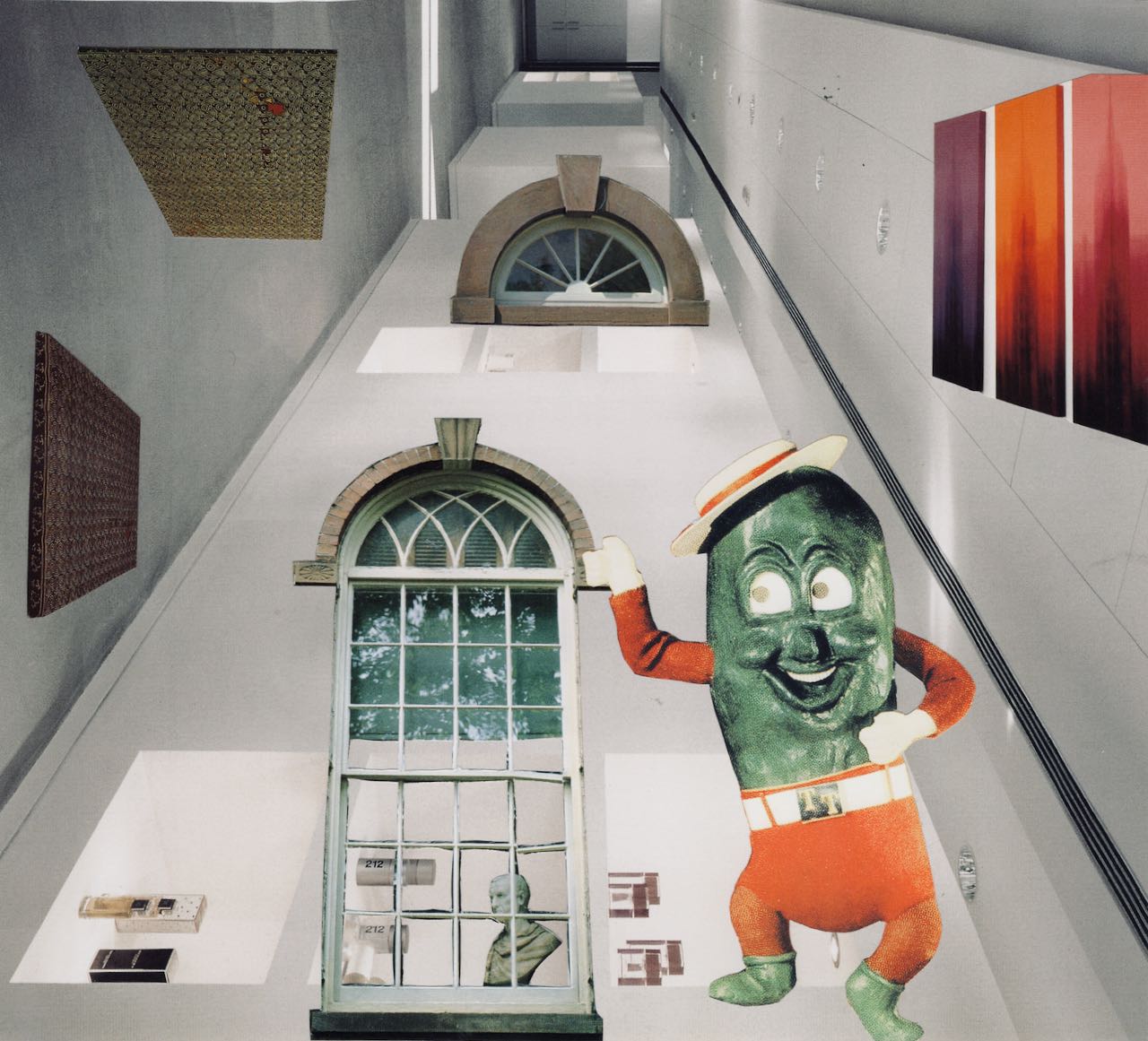
Exciting follow-up of The Museum of Nothing. The Soup Annex at the NewGrit art space (811 State Street) was included in Santa Barbara's 1st Thursday art walk, September 7, 5:00-8:00. This show had a soft opening on August 2, at 3:30-6:00, and then has been open most afternoons 12:30-4:00. The show closed on September 15, 2023. The Soup Annex featured what I call The Campbellarium, a wall of Campbell's soup can labels, as well as a study center to peruse binders of Progresso, generic, and "boutique soups." More than a hundred Wheaties boxes adorned many walls and ledges. And there was a sampling of a collection of mini-collages on 3x5 cards--what I call Shuffle Art because the cards can be viewed in any order at any rate.
Perhaps it goes without saying that there was also a display of candy tins.
Here is an audiovisual tour of this version of the museum: https://youtu.be/amQmUPYkMag
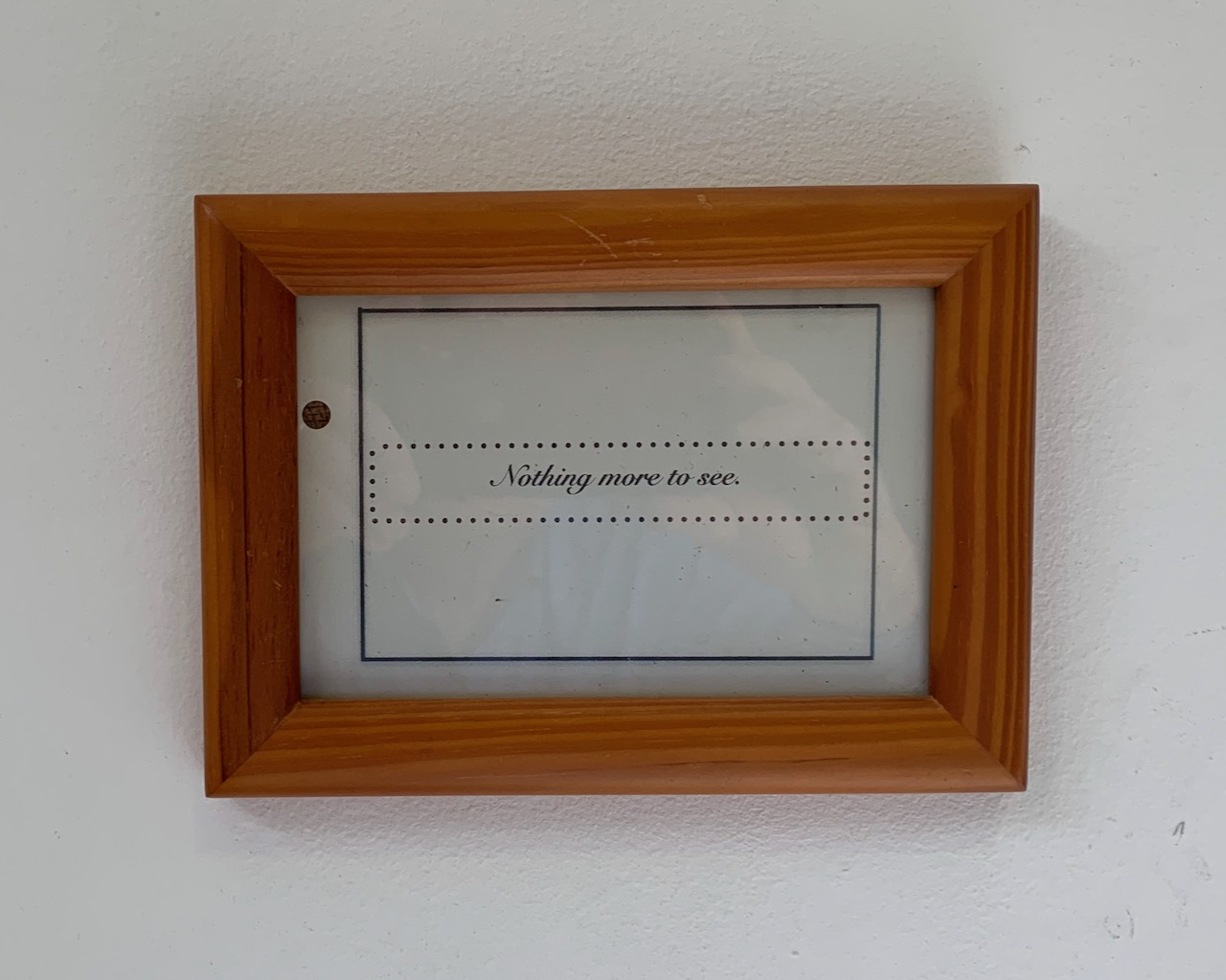
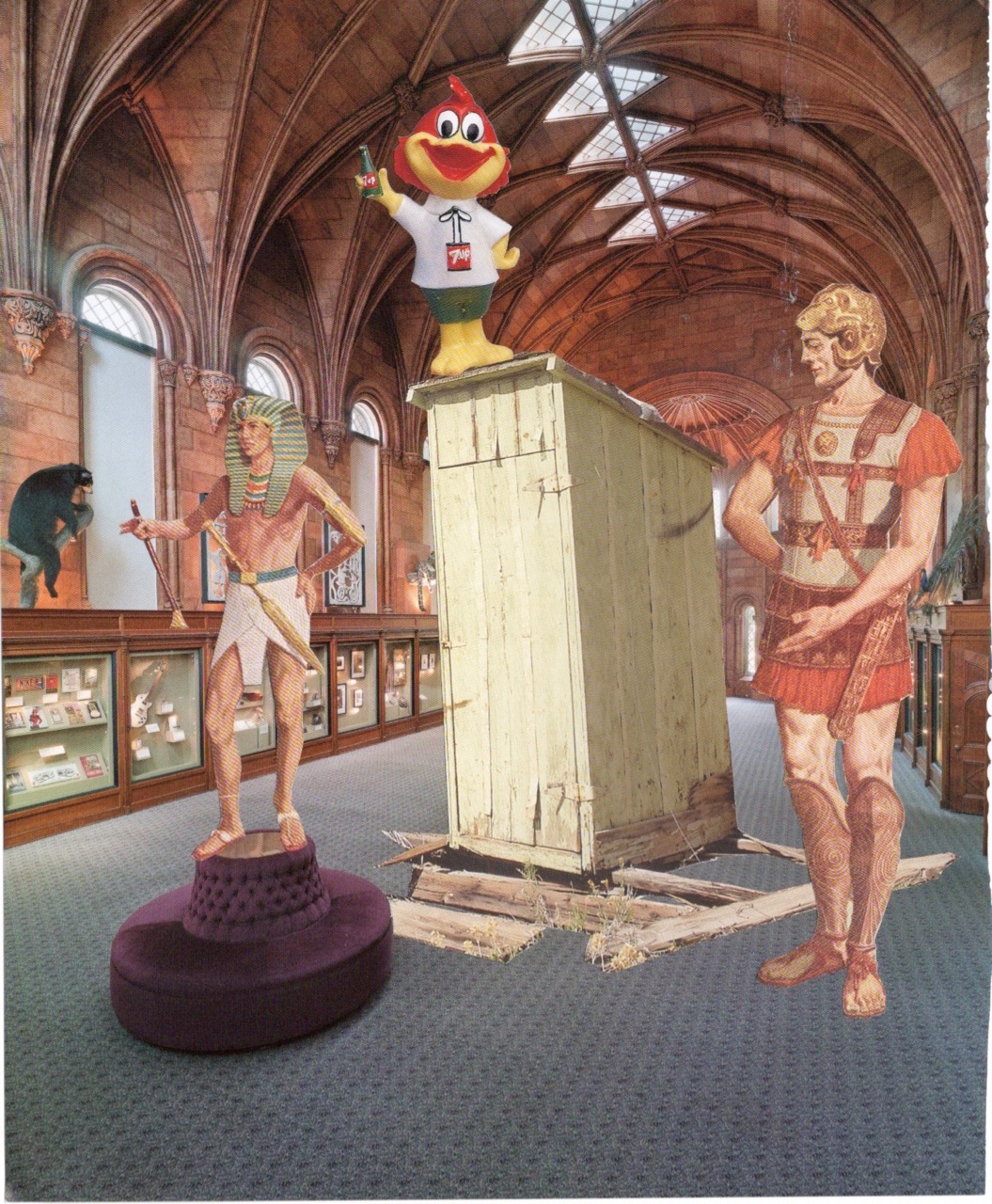
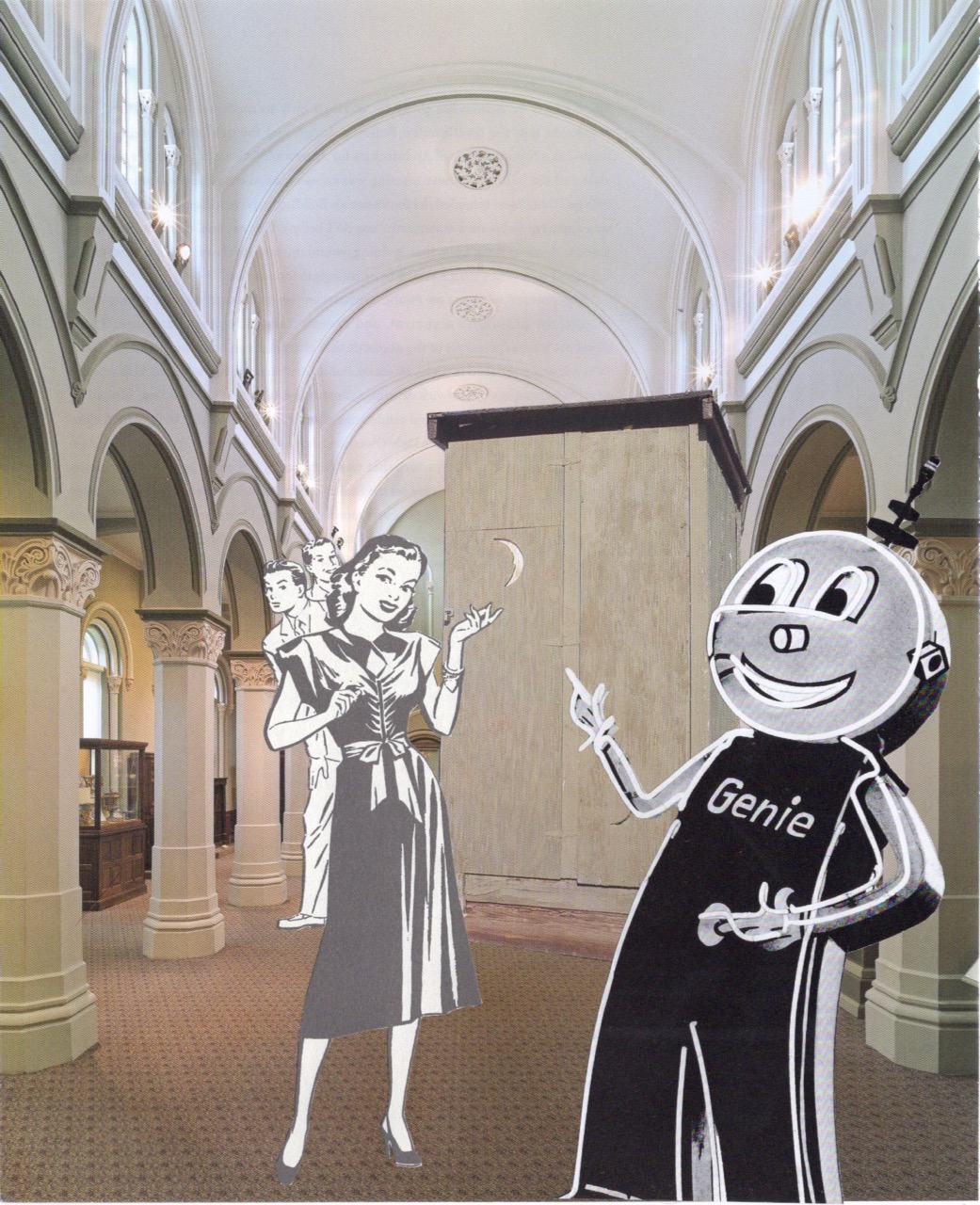
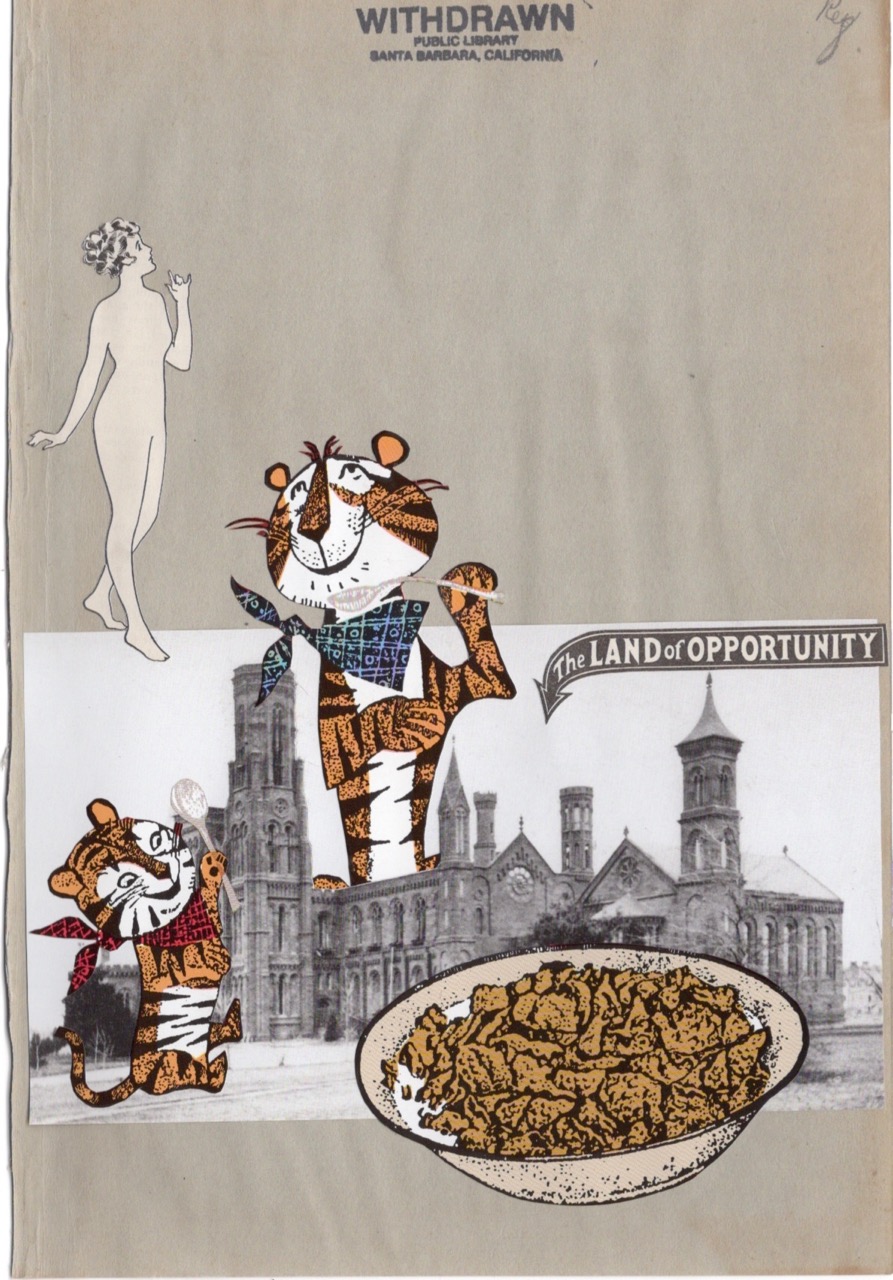
This show followed the recently closed Beta Test version of The Museum of Nothing, which opened at the Red Barn Gallery at UC Santa Barbara on June 22, 2023, with the recto--A side--then Re-opened with the verso--B side--on July 7. That version of The M.o.N. closed on July 14. See below.
Here is the coverage from Keith Hamm for UCSB.
KEYT-TV gave us some nice coverage.
Bethany Thornton did a terrific interview piece for KCBX.
See images below.
I created an audiovisual tour of that show for those who missed it:
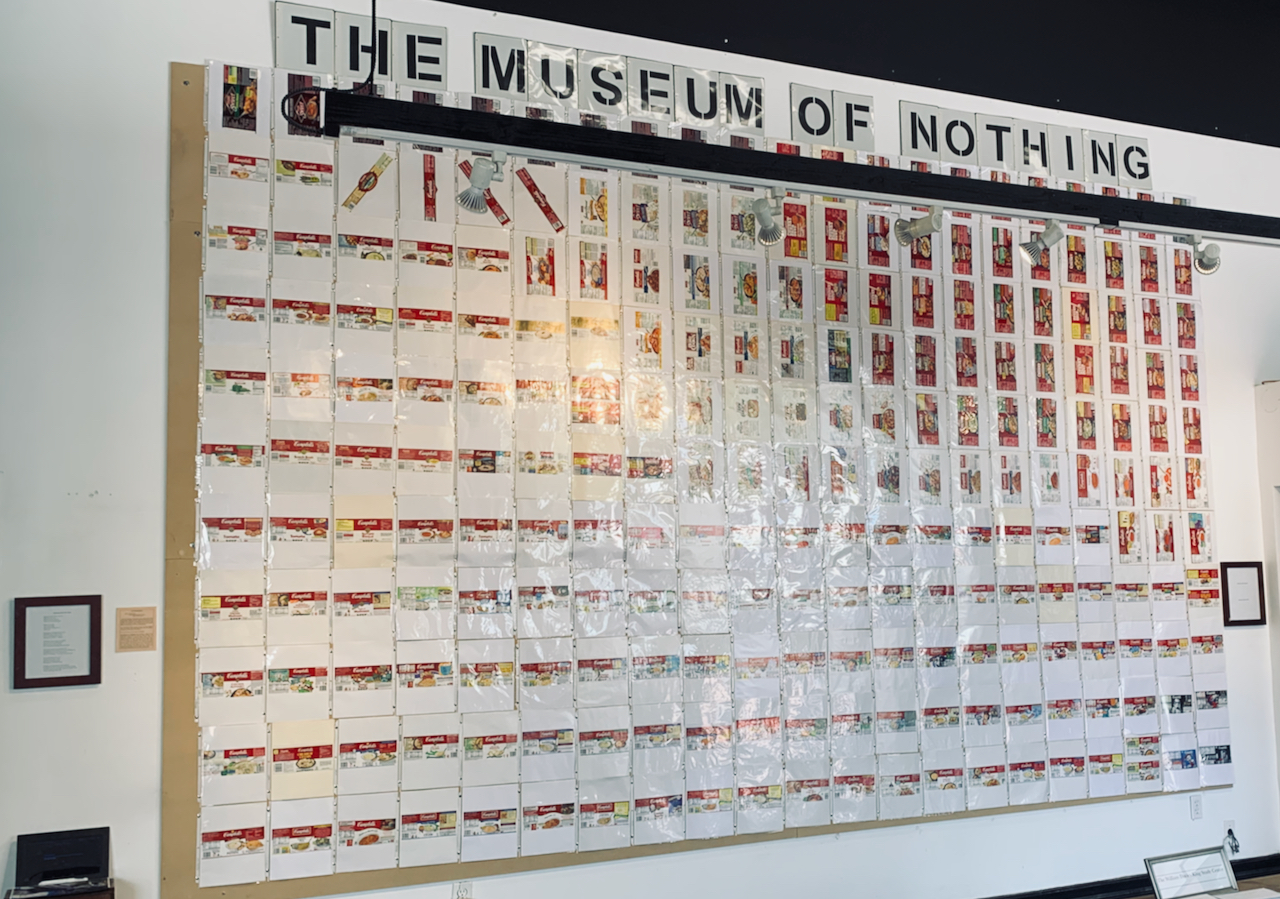
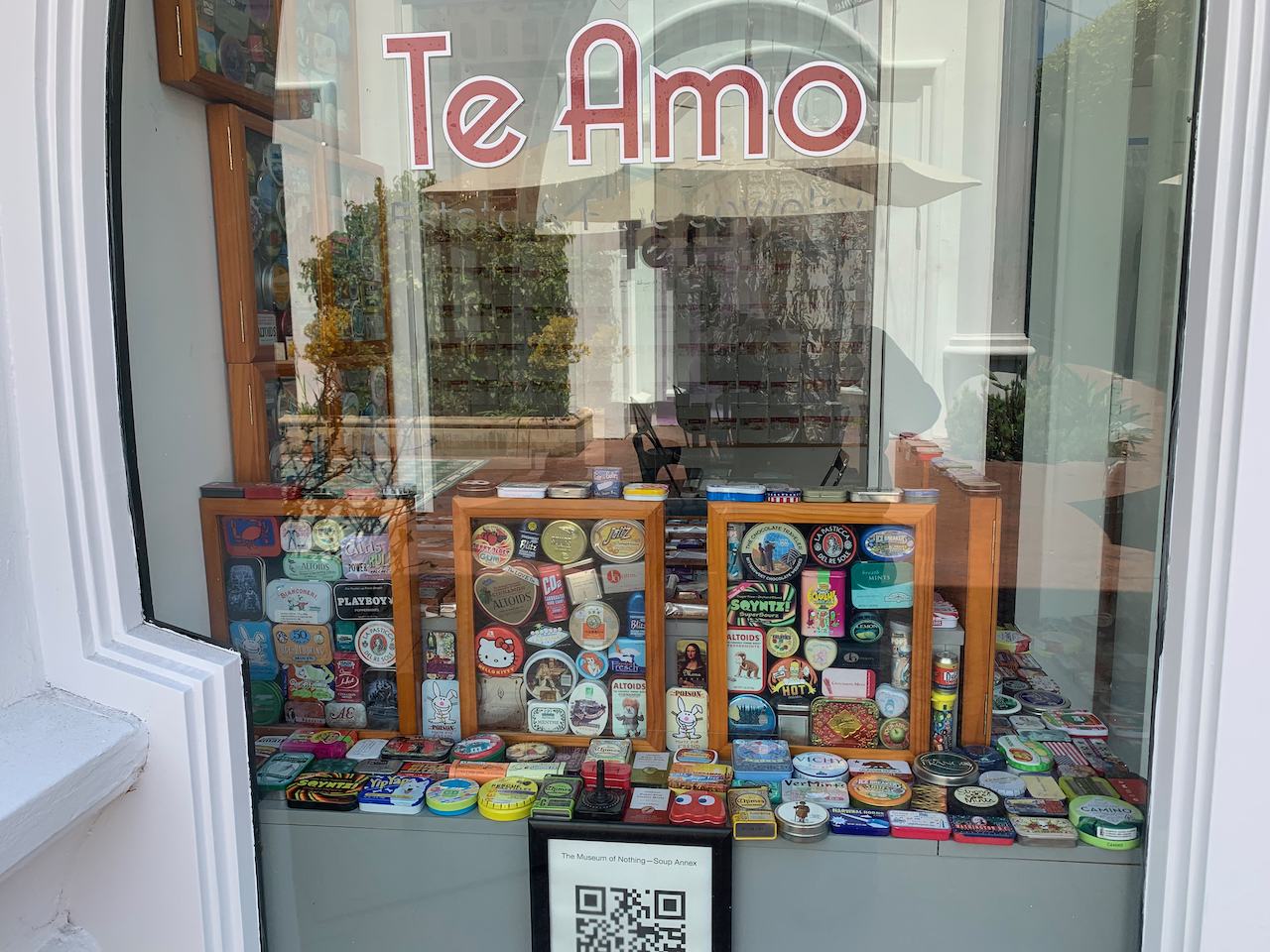
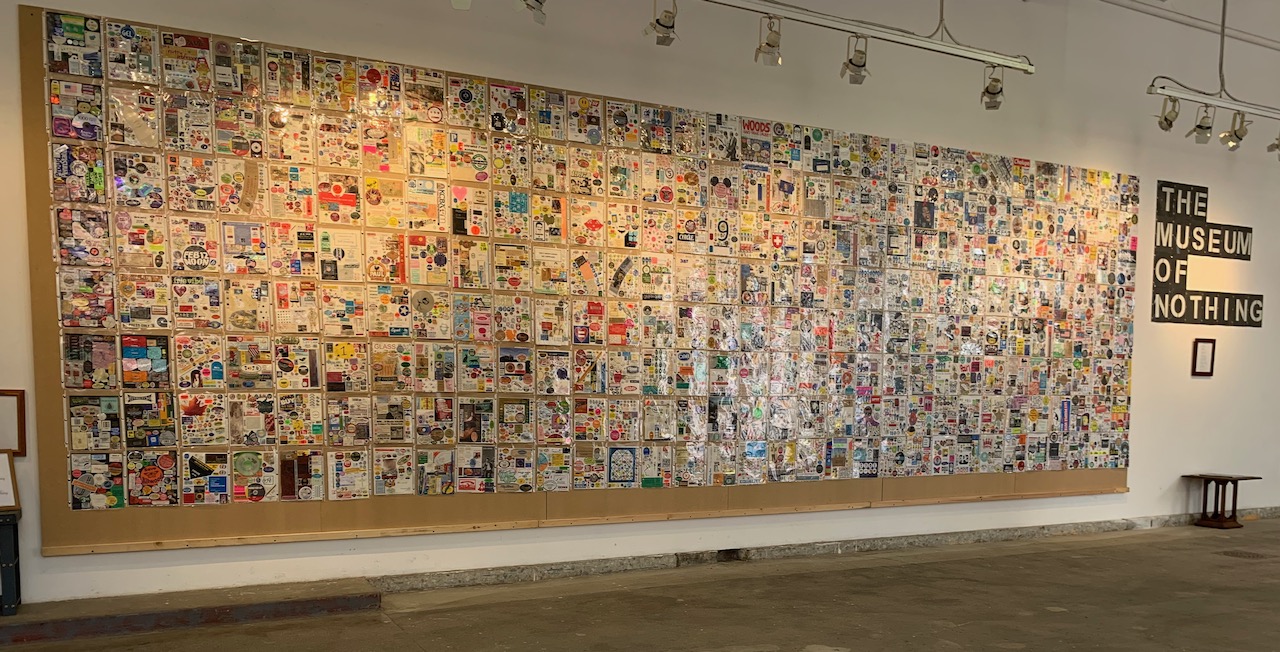
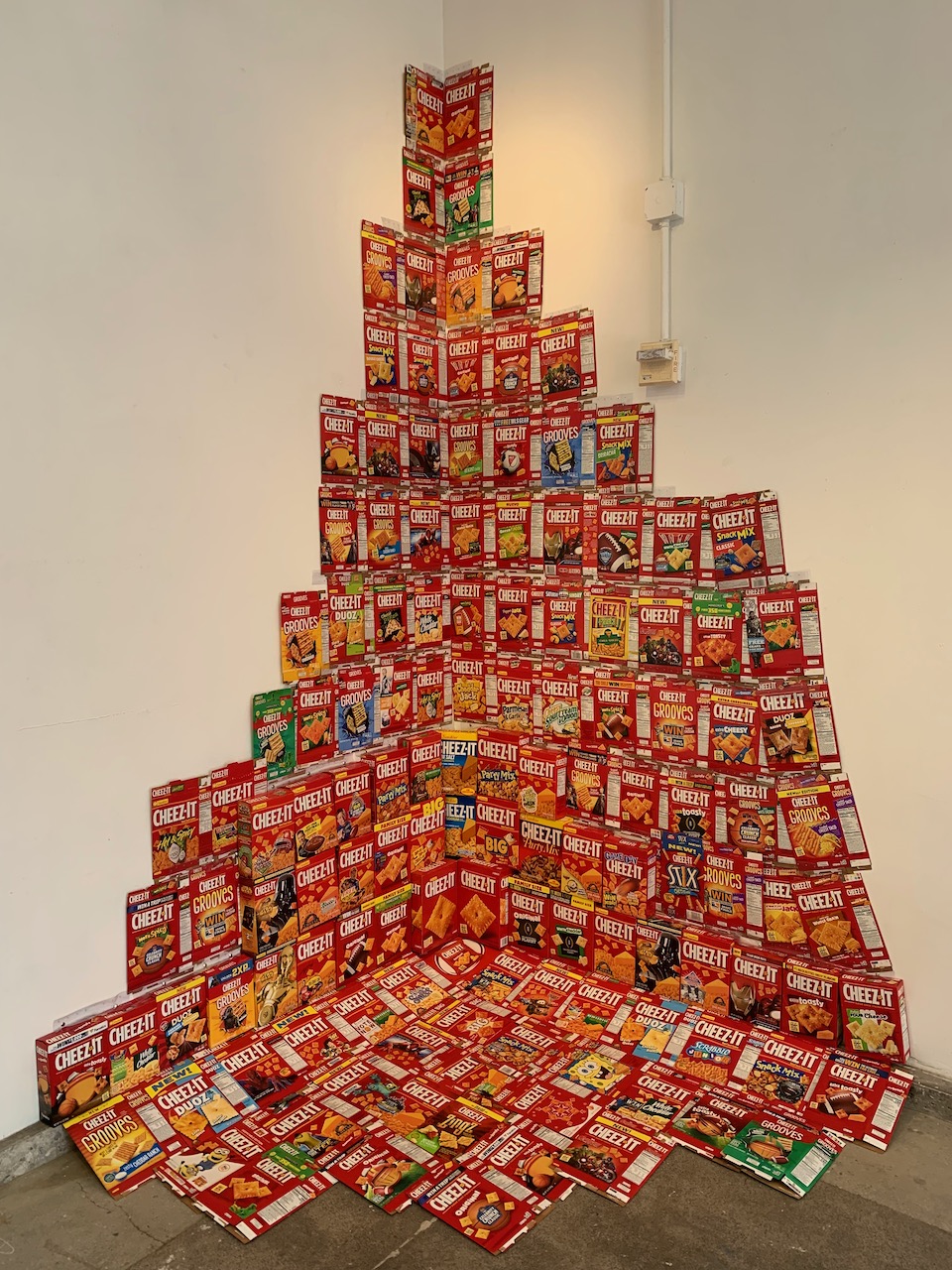
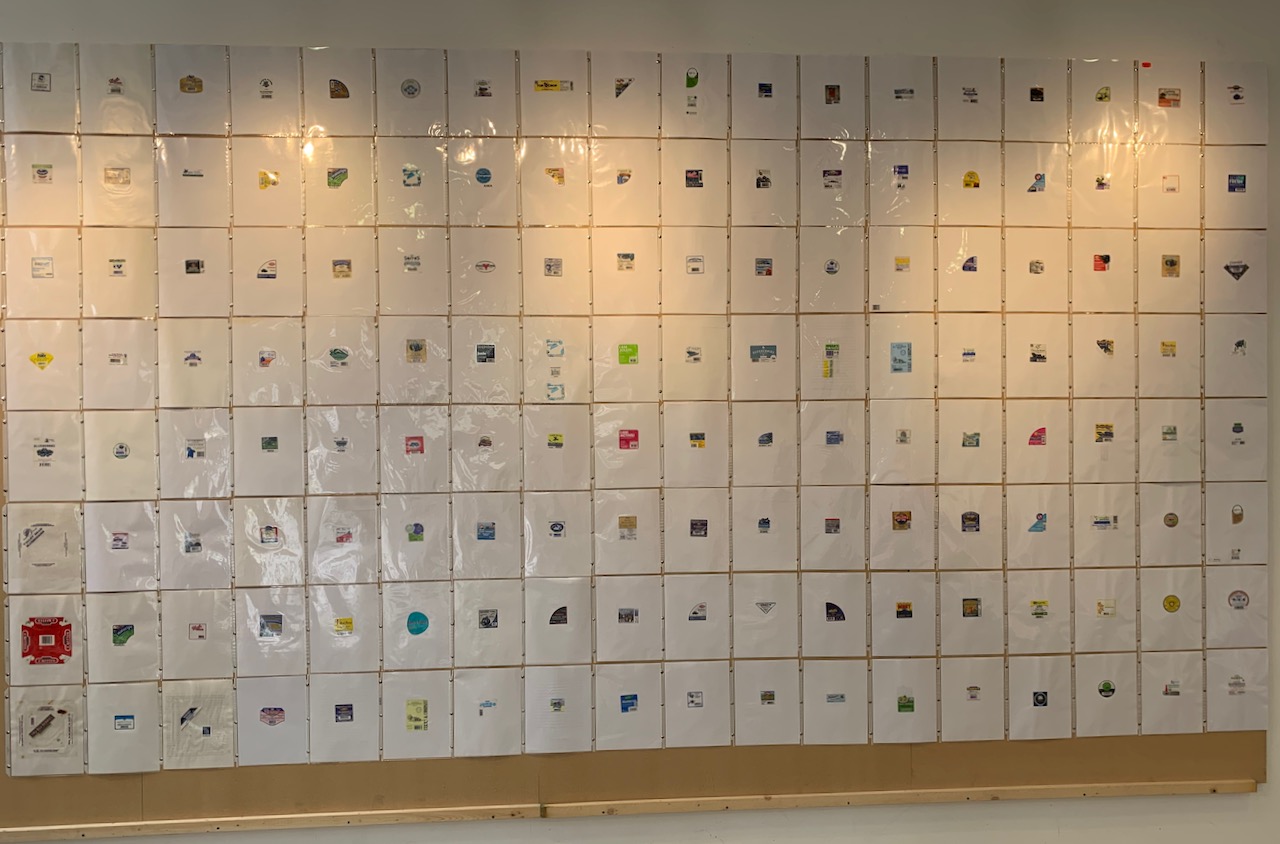
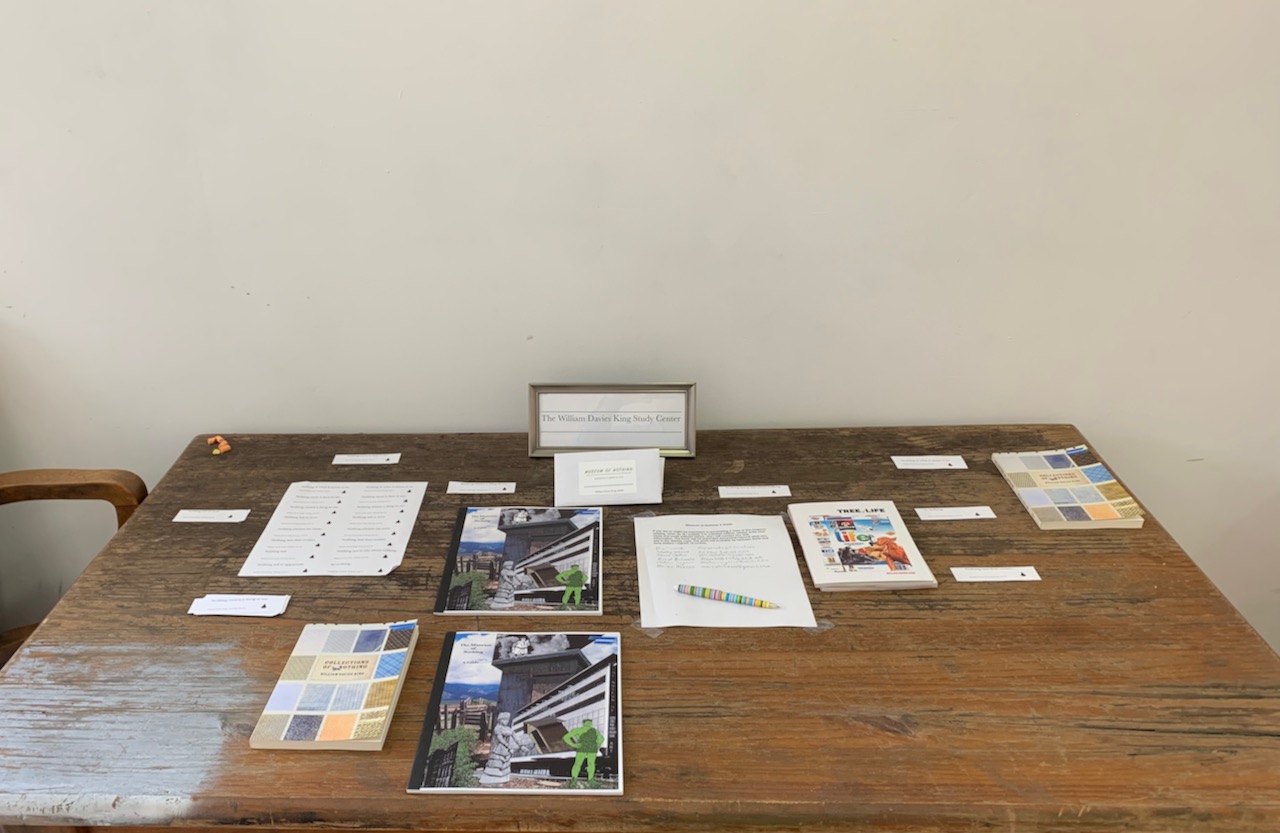
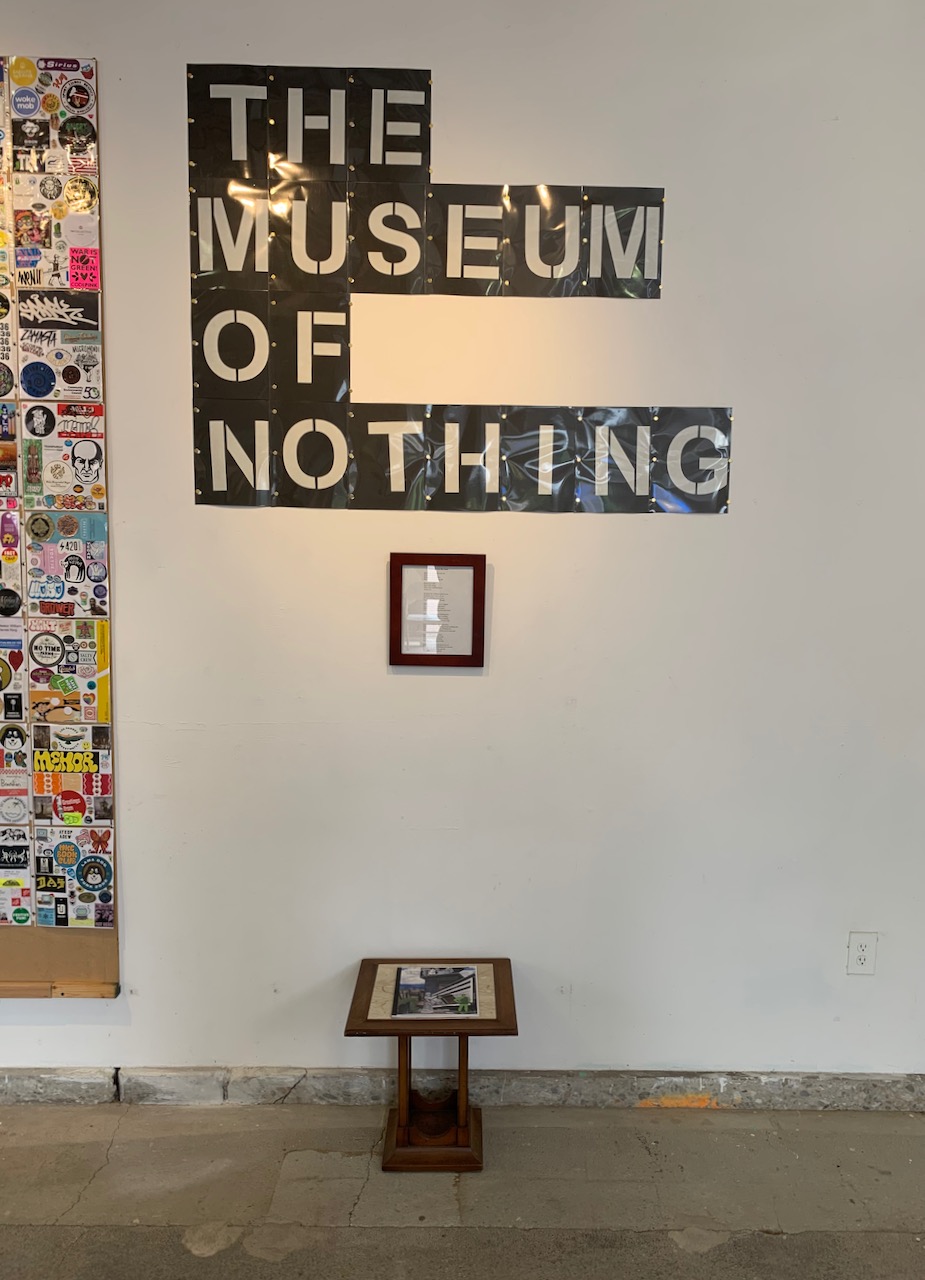
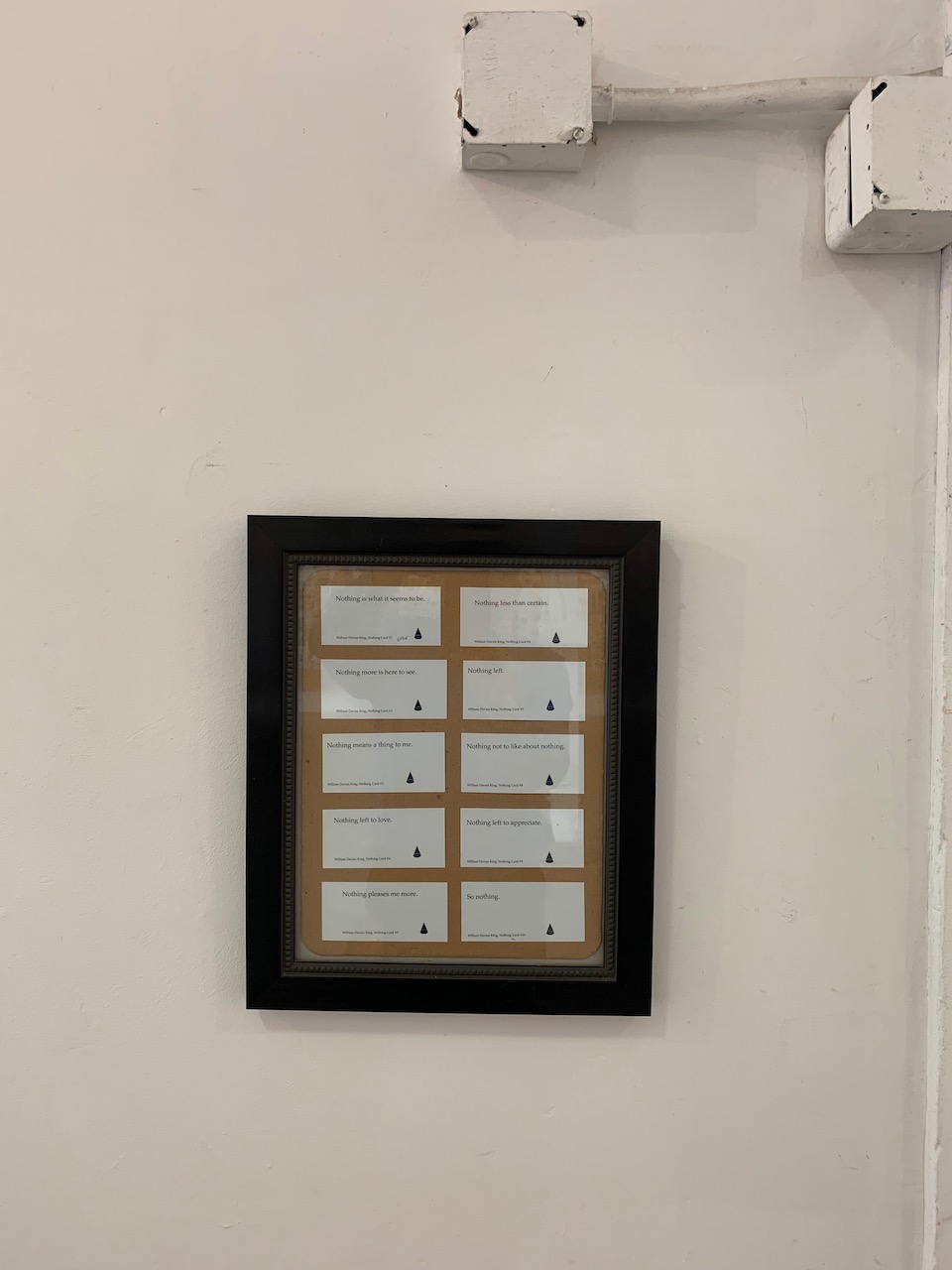
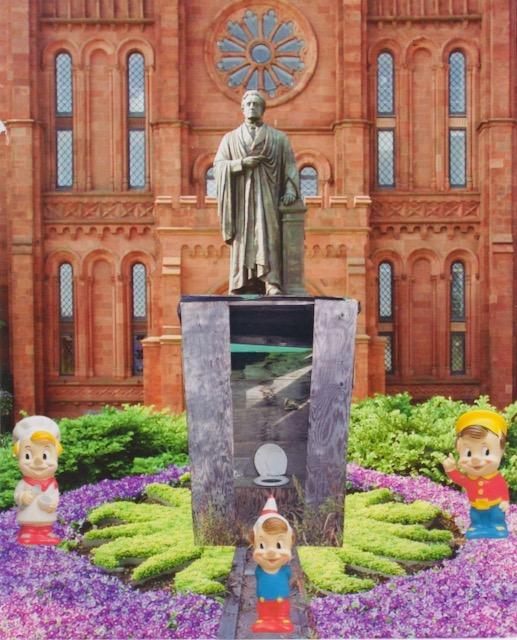
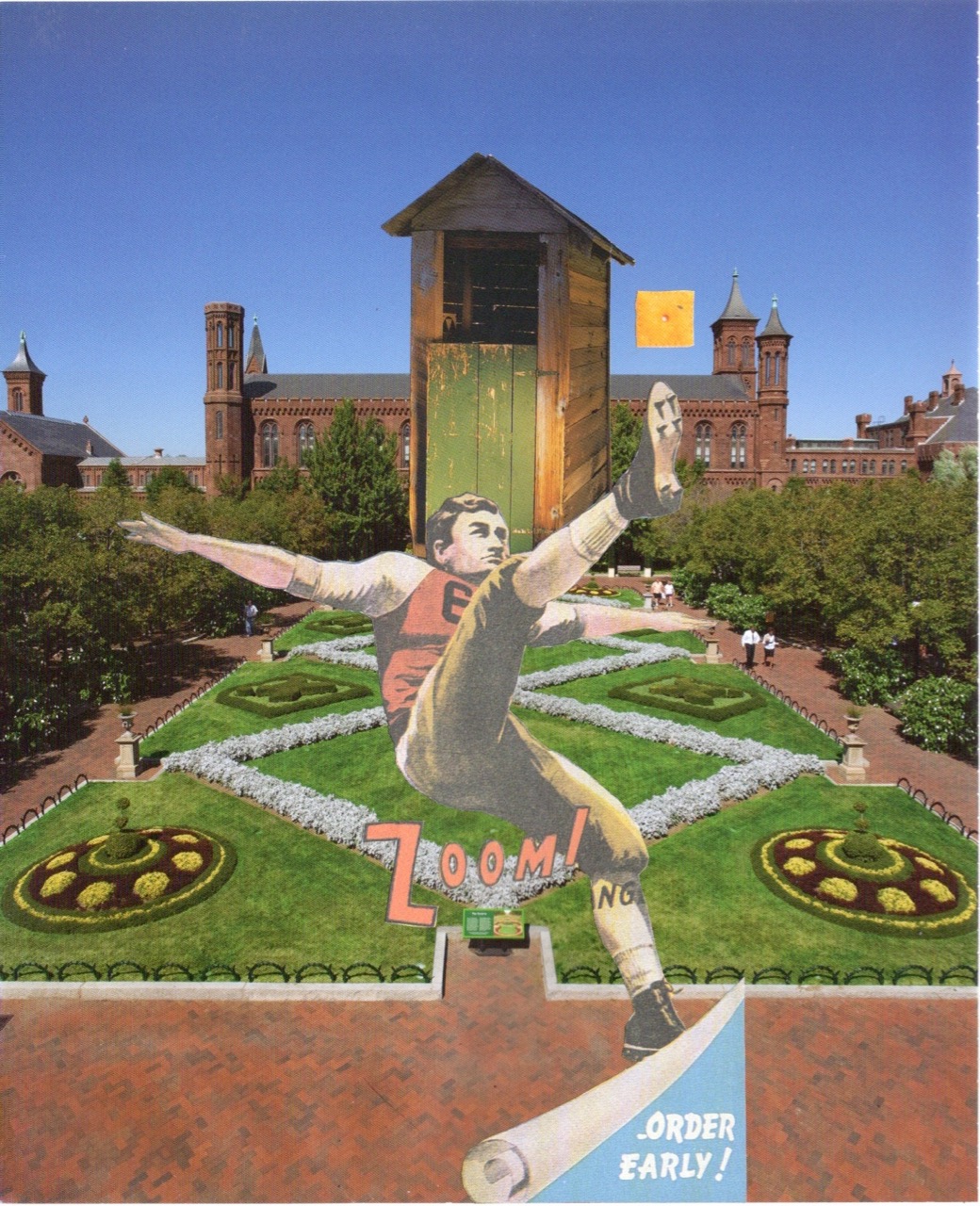
Can't have a museum without a glossy gift shop catalog/guide, so I created one, which is only in prototype version now. The motifs are Smithsonian + outhouse. If you might be interested in purchasing a copy (once I publish it), at a cost of approximately 30 to 40 dollars, email me. And here is some text for the Introduction to that book:
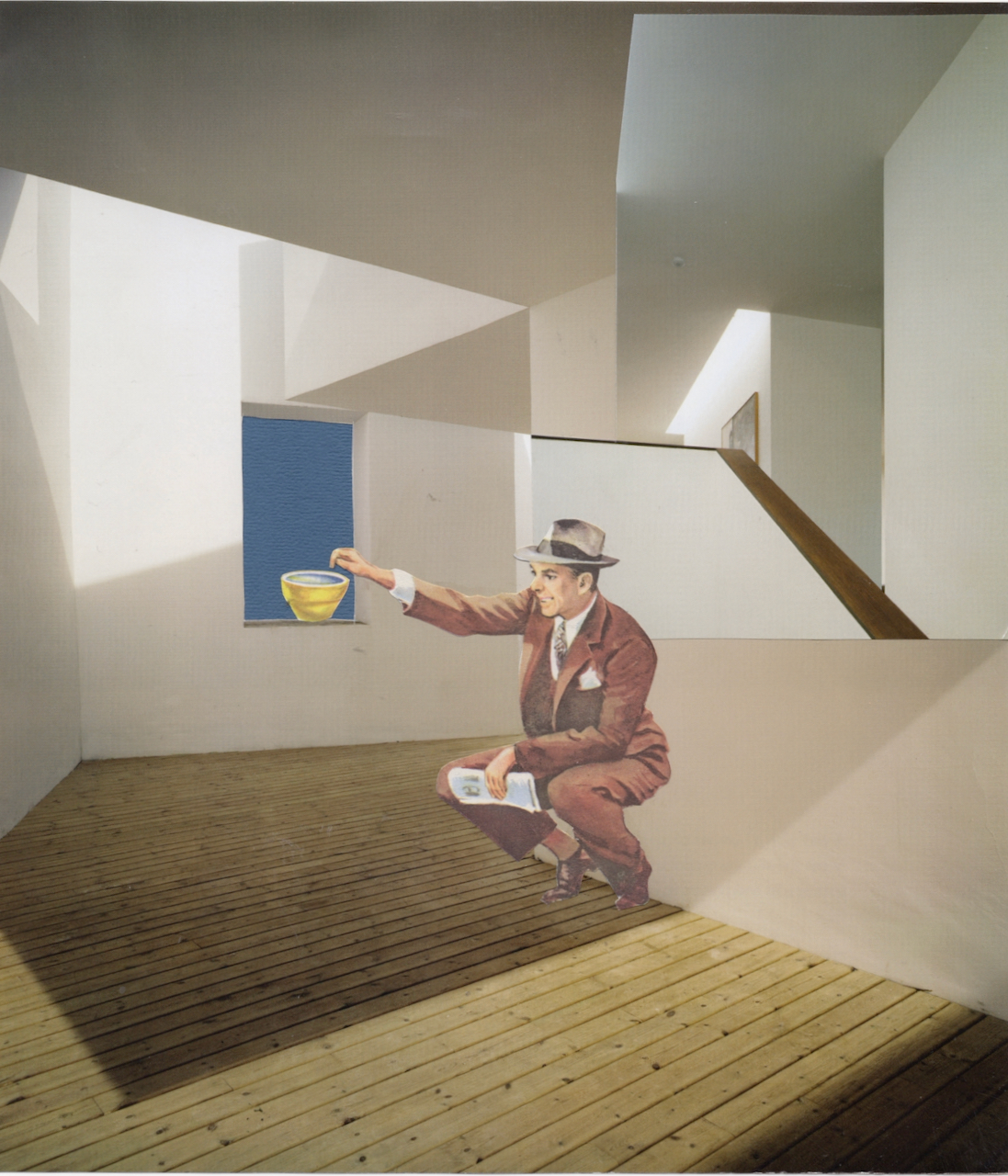
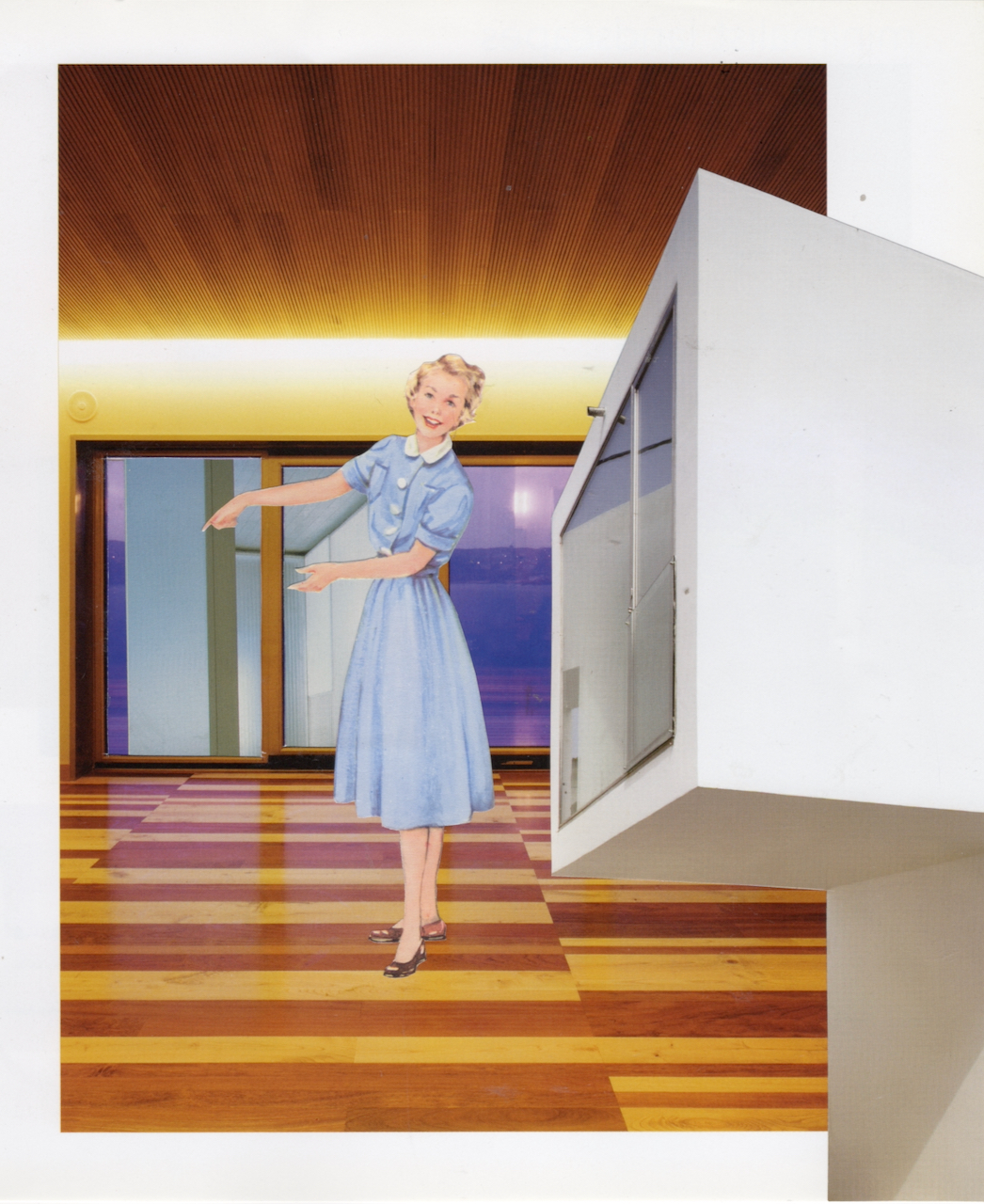
The Museum of Nothing was founded in 2022 for the study, cherishment, and frivolous display of nothing in beautiful glass cases, also on shelves and pedestals. The museum aims to be jam-packed with more or less galore than you can fathom for your exclusive viewing pleasure. Nothing—our unfathomable nothing—aches to be hung with such flagrant insignificance, such inconsequential buzztalk, and such whimpering self-hatred, that the all-seeing eye of time immemorial shall weep with joy. In practice, both eyes will most likely do so. . . .
Founded in 1776, the museum responded to the founders’s insomniac fretting over all the possessions that Americans would eventually hold and then discharge as worthless—the tawny turkey feathers, musket ball cartons, and busted quilting needles. The fundamental mind simply halts at the halter of it all around the neck of nothingness. Were we to think these no-things could claim no repository, no card catalogue, no seat in the public lavatory of entitlement? Might there not be some edifice of brick and mortar to gather the accumulated vacancy of sense in the district of study? Thereto would arise a bastion, just beyond the reach of rationality or reason to exist. This very book would vanish from your hands, if The (stately) Museum of Nothing were not. Call me verbose, but then you’re just adding words to the flux.
Down each hall go corridors, lined on every expanse with walls. Lovely arches over the void seem especially redundant. Soaring ceilings run with pus. Grab a rag! After a simple handshake transaction at the outlandish turnstile, you will be granted affordances to behold whatever you might care to guess, if you care at all or have even given it a second thought. The vastness never seems to end, which leaves it up to you to end, or not to end, as you choose. . . . A box in the lobby stands waiting for your comments, which deserve to be stored for posterity and then some. As usual, there will never be a time like now to introduce the obvious.




My one-act play: "Les Mots Justes, or Hold Your Tongue" in Alone,Together anthology
This 6+ hour festival of Zoom plague-inspired theater took place on June 6, 2020, sponsored by UCSB's play development program LAUNCHPAD--39 plays, 24 playwrights.
And I was among them with this 10-minute play "Les Mots Justes, or Hold Your Tongue"
Now an anthology of all these plays has been published by Dramatic Publishing Company, and I was happy to be the editor of this book since it gave me the opportunity to work with a great group of professional playwrights.
Here is UCSB's press release on the publication:
https://www.news.ucsb.edu/2020/020002/lasting-encore
The wonderful performance of my play can no longer be seen on the internet because all these plays are now licensed for others to produce, but contact me if you'd like to read my script. Here is a link to the festival website:
https://www.theaterdance.ucsb.edu/news/event/817
Here is the Dramatic Publishing Company's page on the book, which is not available except electronically now but will soon be in print:
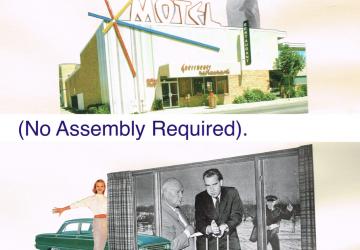
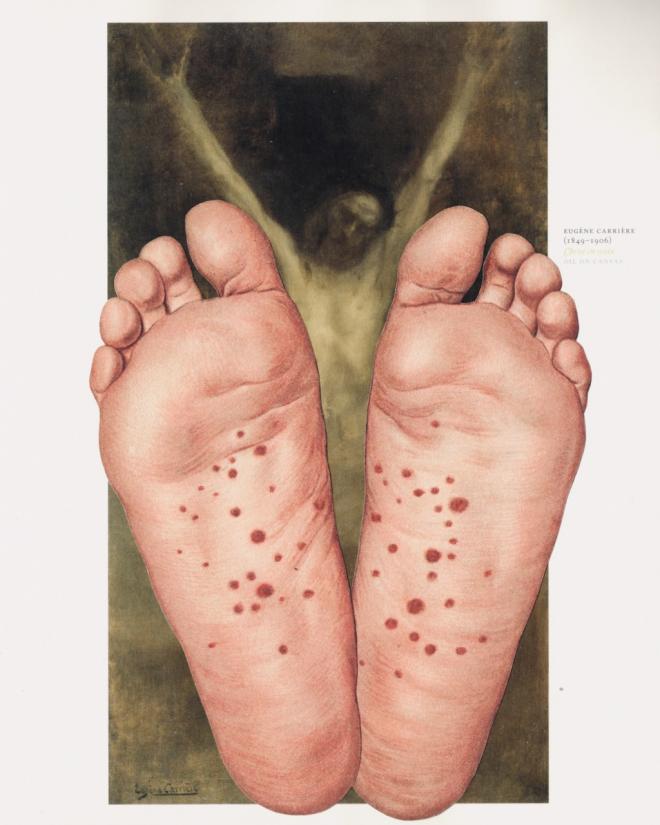
This exhibit finally was dismantled in December 2021 after being on display for nearly two years (most of that time with the library closed to the public due to COVID).
But IF you did get in, you would have seen a display of my collections of nothing, co-curated by me and a UCSB undergrad Museum Studies student, Rhiannon Gonzales.
Here is a link to a video "walkthrough" tour I quickly made before the library closed:
https://spotlight.library.ucsb.edu/starlight/the-creative-edge-of-collecting
And here is a link to UCSB Library's page about the exhibit:
https://www.library.ucsb.edu/events-exhibitions/creative-edge-collecting
This is a feature story about the exhibit, written by a UCSB undergrad, Eddie Lo:
https://spotlight.library.ucsb.edu/starlight/the-creative-edge-of-collecting
And this is a wonderful interview of the curator, Rhiannon Gonzales:
https://spotlight.library.ucsb.edu/starlight/the-creative-edge-of-collecting
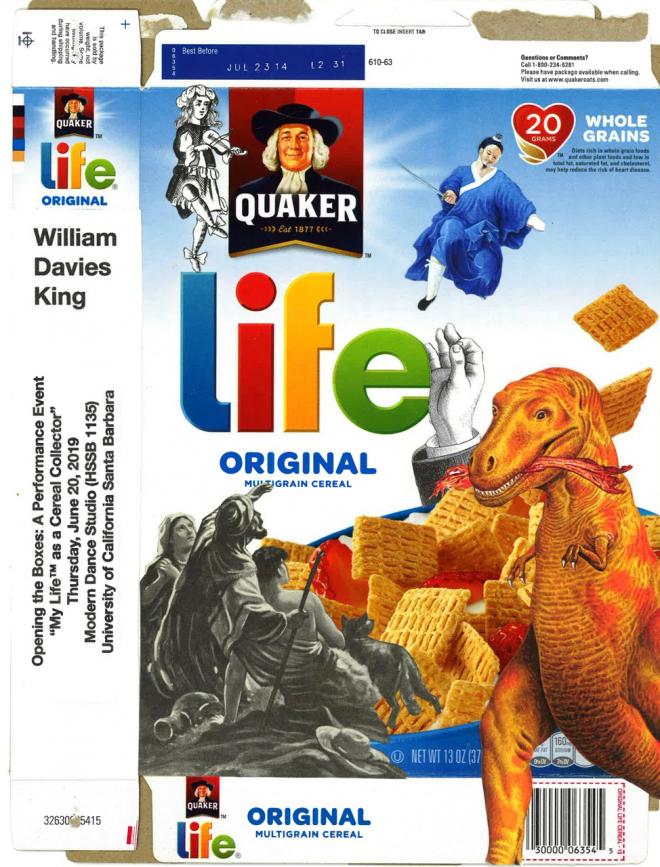
o accompany my June 2019 performance event, Tree of Life (TM), my old friend Bill Crawford suggested we create a catalogue. He co-wrote a book of breakfast cereal history, and I am a collector of cereal boxes. Seems to work.
I wrote part, and he wrote part, and we created some cereal box collages with a book designer in Mexico.
It came out pretty well, and I have copies for purchase, if you write to me.
My aspiration is to repeat the Tree of Life (TM) event in some other exhibition space, and the catalogue would apply just as well to such an exhibit.
Here is my exhibition proposal---in pdf.
Document
KOLAJ is an excellent quarterly journal of collage from around the world, and they have an annual festival in New Orleans, to which I was invited in 2019:
http://www.kolajmagazine.com/kolajfest/2019/kolaj-fest-new-orleans-2019-program-book.pdf
I brought many bibliolages to show there in the LeMieux Galleries, and I was going to do a presentation on bibliolagerie--hyper-illuminated books.
BUT along came Hurricane Barry, and so after one half of a day, the festival was cancelled, and most people fled for home. Wendy and I stayed around, and the hurricane turned out to be a non-event for New Orleans. It hardly even rained.
No one saw the work.
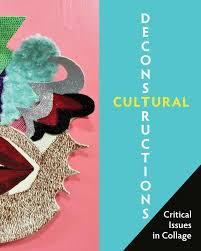
But Ric Kasini Kadour, who runs the organization, put together a book that includes a section on my work. The book is called Cultural Deconstructions, and it is available for sale through the KOLAJ site at this link
https://shop.kasinihouseartshop.com/product/cultural-deconstructions-critical-issues-in-collage